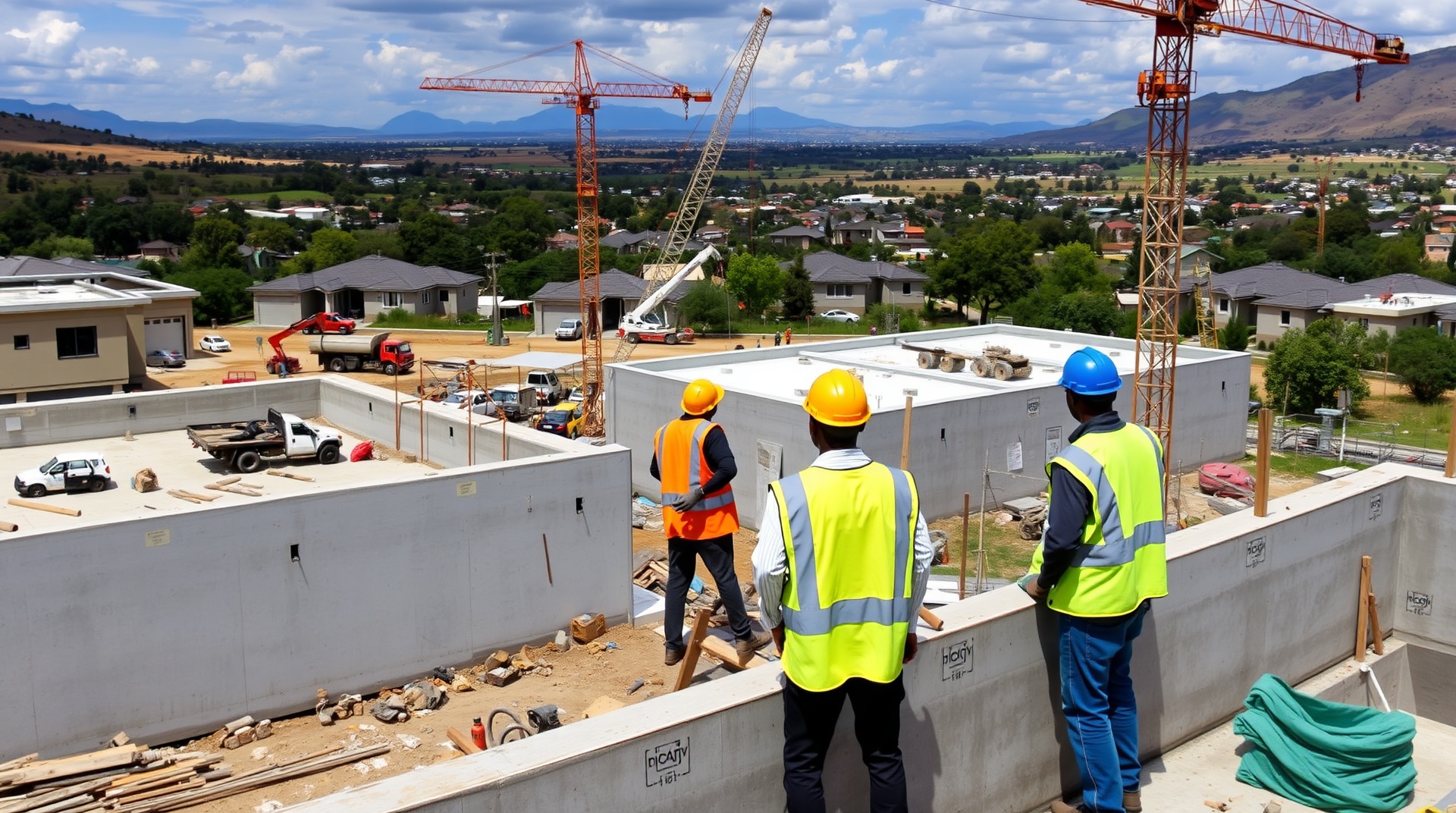
The types of home extensions we build
Most extensions in Johannesburg fall into one of the following shapes. Each one has its own structural, planning and services implications, which is why the first site visit matters more than the brochure.
Extra bedrooms
A new bedroom can be added on the side or rear of the house, or carved out of existing space where the layout allows. The practical questions are where the new wall line sits on the stand, how the new room is lit and ventilated, and how the roof ties into the existing structure.
Extended open-plan living areas
Opening a lounge or dining room into a wider living space usually means removing or replacing a wall and rethinking the ceiling and floor finishes. If the wall is load-bearing, a structural solution such as a beam is designed and specified before any demolition starts.
Double-storey additions
A second storey changes how the load travels through the house, so this is where engineering input and municipal approval matter most. Stair placement, slab or timber construction, waterproofing and the existing foundation capacity are all checked before work begins.
Extended kitchens
Extending a kitchen is often as much about plumbing and electrical points as floor area. We plan the new sink, appliance and lighting positions early so the layout is not locked in before the services are priced.
Separate dwelling units and granny flats
A second, self-contained unit with its own entrance, kitchenette and bathroom. Whether this is allowed on your property depends on the zoning and municipal rules that apply to your stand, so that is confirmed before design work goes ahead.

What a home extension project involves in Johannesburg
The sequence below is the same whether you are adding one room or a second storey. The detail and the time each stage takes change with the scope.
- 1
Site assessment
We walk the property, look at the existing structure, the stand boundaries, access for materials and how services run. This is where most of the site-specific risk gets identified.
- 2
Written quote
You receive a written quote built on what we actually saw on site, not a generic rate. It sets out the scope, what is included, what is excluded and how the work will be paid for in stages.
- 3
Design and municipal building plan approval
Drawings are prepared and submitted for approval. In general, structural extensions need building plan approval from the local municipality, which for Johannesburg is the City of Johannesburg. What your property specifically requires should be confirmed with a qualified professional and the municipality before work starts.
- 4
Construction
Site preparation, structure, roofing, services, plastering and finishes follow in sequence, with supervision on site and the programme tracked against what was agreed.
- 5
Handover
We walk the completed work with you, deal with the snag list, and hand over the finished space.
What affects the cost and the timeline
Two extensions that look similar on paper can price very differently once the site is opened up. We do not work from a single rate for everyone, because a rate that ignores your roof, your soil and your access is a rate that changes later.
- The size and shape of the addition, and how much of it is new structure rather than a rework of existing space.
- Structural work: foundations, beams, slabs, staircases and the roof connection to the existing house.
- Finishes and materials you choose, from standard tiling and joinery to higher-spec kitchens, glazing and cladding.
- Services: new electrical points and distribution, plumbing, drainage and any changes to the existing supply.
- Site access, how much space there is for deliveries and waste removal, and whether the family stays in the house during the work.
- Approvals, including drawing work and municipal building plan processes.
Because of this, the company prepares a written quote after assessing the site. The programme is agreed at the same time, and if the scope changes mid-project it is priced and confirmed with you in writing before the extra work is done rather than settled at the end.
What to check before choosing a building contractor
These are the checks you can actually perform yourself, before you sign anything. If a contractor resists them, that is information too.
NHBRC registration
Ask for the registration number and confirm it yourself. Because the NHBRC is set up to protect homeowners having homes built, ask whether your project is meant to be enrolled — enrolment is a separate step from the contractor simply being registered.
A written quote and a signed contract
The quote should state the scope, dimensions, finishes allowance, exclusions and payment stages. A verbal agreement and a single-line price leaves you exposed the moment something differs from expectation.
Proof of past projects
Ask for addresses or site references for work comparable to yours, not just photos. An extension is different from a new build, and a double-storey addition is different again.
Who is responsible for approvals
Establish in writing who draws the plans, who submits them, who pays the submission costs and what happens if approval is delayed. If it is left vague, it usually lands on you later.
Vetted suppliers and subcontractors
Ask who will do the electrical, plumbing and roofing, and whether those trades are vetted by the main contractor. The quality of the extension is usually the quality of the trades behind it.
Payment stages
Payments should follow completed stages of work, with a retention held while snags are closed out. Be cautious of any request to pay most of the contract value before the work exists on site.
More on this in our guide to choosing a building contractor in Johannesburg, and our why choose us page sets out how we work.
Why homeowners build with Home First Creations
We are a Johannesburg construction company working across Gauteng. Our work on extensions sits alongside new home builds, commercial construction, turnkey projects and renovations, so the same site discipline applies whether we are adding a bedroom or handing over a finished building.
Extensions are also a renovation job, which means the wider team and service list matter as much as the structure: plastering, tiling, ceilings, waterproofing and finishes are handled under the same roof rather than split across unrelated contractors. You can see the full scope on our construction services page and finished work on the portfolio.
Where we build extensions
We build home extensions and house additions across Johannesburg and the wider Gauteng province. Our office is in Roodepoort, which puts most of the city within easy reach for site visits and supervision. If your property is outside Gauteng, tell us where it is and we will say honestly whether we can take it on. You can find our address, opening hours and map on the contact page.
Questions homeowners ask before extending
In general, a structural extension needs building plan approval from the local municipality — the City of Johannesburg for properties in the city. Whether your specific project needs it, and what else applies such as zoning or coverage rules, depends on the size, position and nature of the work. Confirm the requirements with a qualified professional and the municipality before construction starts, and make sure the responsibility for submissions is written into your agreement.